Struggling to Recover After Your Workouts? Discover the Secret to Optimal Recovery
In today’s increasingly active urban lifestyle, many young professionals in Indonesia make time to exercise before or after work to maintain fitness and physical performance. However, it’s not uncommon to hear complaints of prolonged muscle soreness, persistent fatigue, or feeling unready for daily activities or the next training session—despite exercising regularly and in a structured way.
This condition is often linked to suboptimal sports recovery. Intense physical activity and repetitive training can trigger muscle tension, fatigue, and mild inflammation in body tissues. Without the right recovery strategy, these issues can accumulate and negatively impact performance, training consistency, and even increase the risk of injury.
Numerous studies in sports medicine show that effective recovery plays a vital role in tissue regeneration, maintaining muscle function and strength, and helping the body return to a ready state for the next physical challenge. Recovery, therefore, is not just a complement to training—it is an essential component of a balanced fitness program for today’s active individuals.
Maintaining Physical Performance Through Sports Recovery
In sports medicine, recovery goes far beyond simple rest. It involves complex biological processes that engage the muscular system, blood circulation, metabolism, and hormonal responses. When recovery is not optimal, the risk of prolonged fatigue, mild inflammation, and declining performance increases.
According to dr. Nahum, Dipl. CIBTAC, Sp.K.O., a sports medicine specialist at Seraphim Medical Center, Gading Serpong, recovery is a critical phase of the overall training cycle.
“Without a proper recovery phase, the muscle adaptations and performance improvements we expect from training can actually be hindered. A medically planned and monitored recovery process helps the body become ready again for the next session,” explains dr. Nahum.
Infrared Sauna: Therapeutic Heat for Muscle Recovery
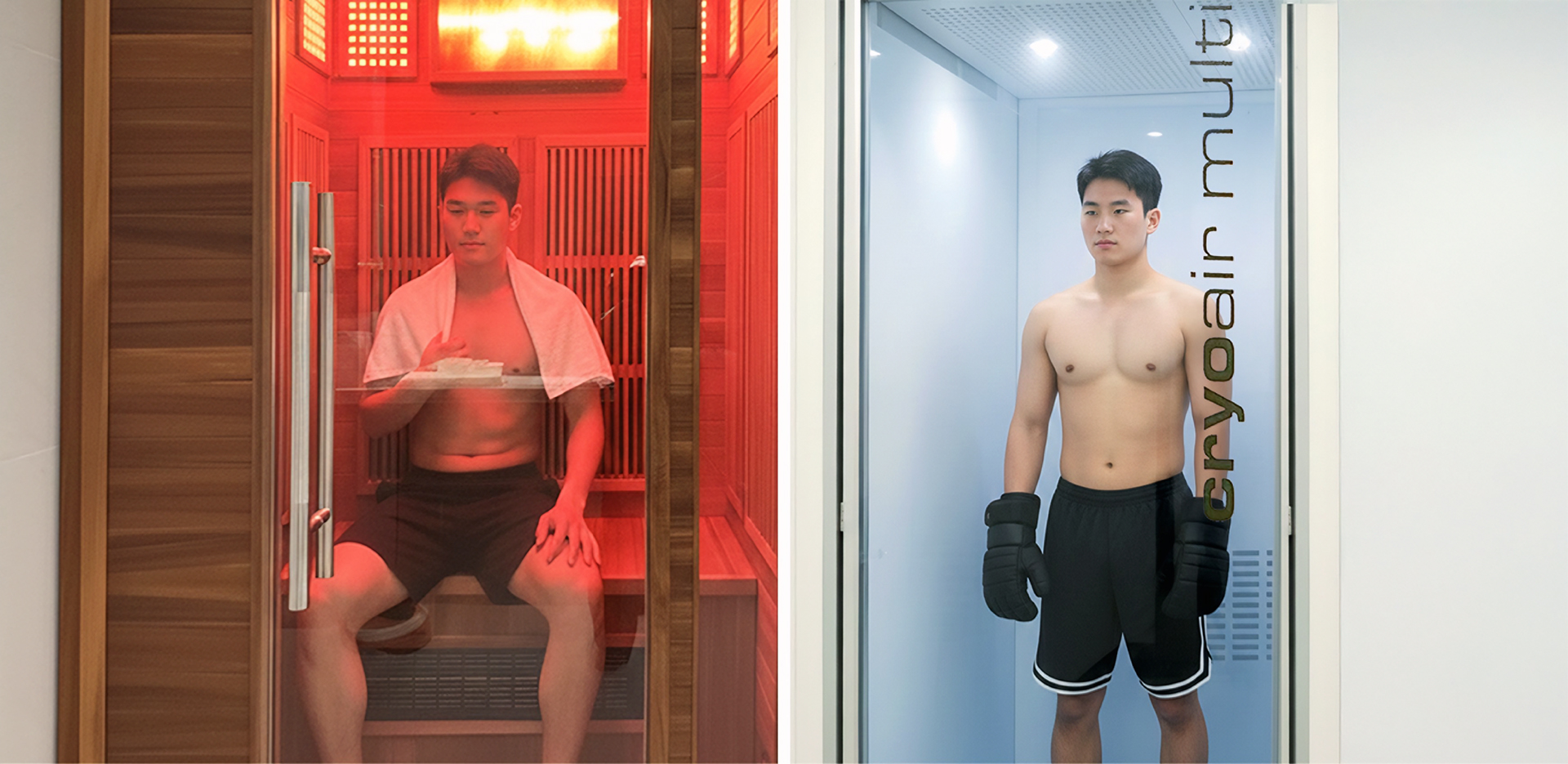
Infrared Sauna is a heat therapy that uses infrared waves to penetrate deeper into body tissues compared to conventional saunas. This mechanism helps improve blood circulation, promotes muscle relaxation, and supports nutrient delivery to tissues under tension.
In post-workout recovery, scientific studies show that infrared sauna sessions after exercise can reduce muscle soreness and help restore neuromuscular performance more effectively than passive rest alone. Infrared Sauna may help to:
- Improve blood flow and oxygen delivery to muscle tissue
- Reduce muscle tension and promote relaxation
- Support a faster perceived recovery
“Infrared Sauna works by increasing deeper tissue temperature, helping muscles relax and recover after intense physical activity,” says dr. Nahum.
Cryotherapy: Cold Exposure for Inflammation Control
Unlike heat therapy, Cryotherapy involves short-duration exposure to extremely cold temperatures to trigger physiological responses that help control mild inflammation and reduce muscle pain after exercise.
Cryotherapy has been widely studied and used for post-workout recovery, especially for its ability to:
- Reduce inflammation and swelling
- Relieve muscle and joint pain
- Accelerate tissue recovery
- Support readiness for the next training session
According to dr. Nahum, Cryotherapy is highly relevant for individuals with high training intensity or those recovering from mild injuries.
“Cold exposure helps control inflammation and provides a natural analgesic effect. In sports, Cryotherapy is often used to speed up recovery so the body can return to optimal function in a shorter time,” he explains.
A Balanced Recovery Approach: Combining Infrared Sauna and Cryotherapy
Integrating both methods offers a balanced sports recovery approach—combining the relaxing effects of heat with the inflammation-controlling benefits of cold. This allows the body to recover not only from muscle tension, but also from nervous system and metabolic responses after physical activity.
“There is no one-size-fits-all method. A combination of heat and cold therapy can be tailored to individual needs, physical condition, and fitness goals,” adds dr. Nahum.
An Integrated Recovery Experience at Seraphim Medical Center
As part of its sports medicine and wellness services, Seraphim Medical Center offers Infrared Sauna and Cryotherapy within a medically integrated approach. Each recovery program is personalized by considering:
- Physical activity and sports history
- Muscle and joint condition
- Sleep patterns and stress levels
- Overall metabolic health
The goal goes beyond short-term recovery—it aims to maintain physical performance, reduce injury risk, and improve long-term quality of life.
“Recovery is not just for athletes. Anyone who stays active, works with physical demands, or wants to maintain fitness can benefit from it—as long as it’s done properly and medically supervised,” concludes dr. Nahum.
About Seraphim Medical Center
As a business unit of Bethsaida Healthcare, Seraphim Medical Center delivers a functional medicine–based healthcare approach that focuses on addressing root causes rather than merely treating symptoms. Located in Gading Serpong, Seraphim develops personalized medical services designed to help the body function more optimally—whether for maintaining health, supporting recovery, or enhancing quality of life. This approach is realized through three integrated flagship services: Wellness Center, Beauty & Aesthetic Center, and Sports & Rehabilitation Center, forming part of a modern healthy lifestyle.
Media Contact
Seraphim Medical Center
Gading Serpong, Tangerang
Telp/WhatsApp: 0822 5011 1999
Email: info@seraphimmedicalcenter.com